Engineering Plastics Guide: How to Choose the Right Plastic Material
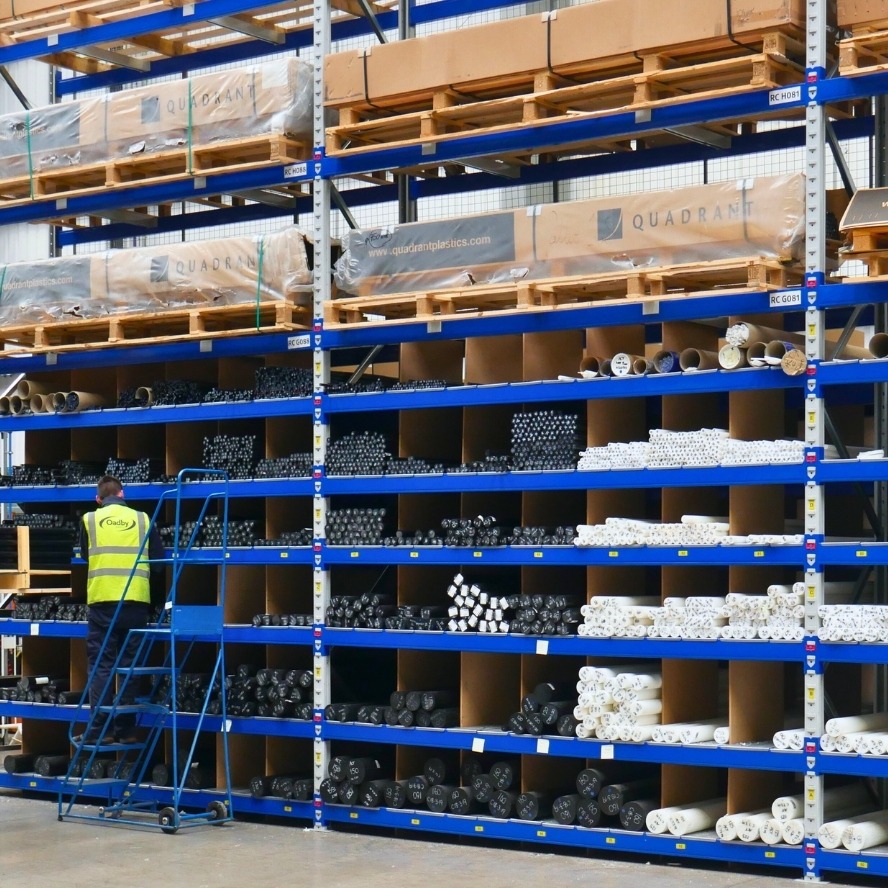
Understanding how to choose the right engineering plastic is one of the most important decisions in any manufacturing, fabrication or engineering project. The right material can improve performance, reduce maintenance, increase service life and lower overall costs, while the wrong choice can lead to premature wear, product failure and unnecessary expense.
At Oadby Plastics, we supply one of the UK’s most comprehensive ranges of engineering plastics, helping customers across manufacturing, food processing, pharmaceutical, transport, construction and many other industries select the right solution for their requirements.
This engineering plastics guide provides an overview of the main material families and explains the factors you should consider when choosing the best plastic for your application.
Engineering plastics are high-performance thermoplastics designed to deliver high mechanical strength, dimensional stability, wear resistance and chemical resistance compared with standard plastics.
Although they each perform differently, they are generally manufactured to perform reliably in demanding industrial environments where components are subjected to:
Engineering plastics are commonly supplied as sheet, rod, tube and machined components, allowing manufacturers to create precision parts for a large range of industries.
No single plastic is suitable for every application.
Each engineering material has been developed to solve specific engineering challenges, meaning factors such as load, operating temperature, friction, moisture and chemical exposure all influence the best choice.
Selecting the correct material can help deliver:
Working with an experienced material supplier, such as Oadby Plastics, helps ensure the correct balance of performance, cost and manufacturability.
Below is an introduction to some of the most widely used engineering plastics that we stock. Within each material, we hold many grades to ensure we can supply and machine materials to suit most applications.
Acetal (POM)
Acetal is one of the most versatile engineering plastics available. It offers excellent dimensional stability, low moisture absorption and outstanding machinability.
Typical applications include:
Acetal is often selected where tight tolerances and consistent mechanical performance are required.
Nylon (PA)
Nylon is recognised for its exceptional wear resistance and toughness and is commonly used in moving mechanical components where durability is essential.
Common applications include:
Various grades are available, including oil-filled, cast nylon and heat-stabilised materials.
UHMW-PE
Ultra High Molecular Weight Polyethylene is known for its extremely low coefficient of friction and exceptional abrasion resistance.
It is widely used in industries requiring smooth material flow and long wear life.
Typical applications include:
UHMW-PE is also available in specialist grades designed for food contact, anti-static environments and sustainable applications.
PET
PET engineering plastic combines excellent stiffness with dimensional stability and low moisture absorption.
It is frequently chosen for precision-machined components where accuracy must be maintained.
Applications include:
Polypropylene (PP)
Polypropylene offers excellent chemical resistance alongside good fabrication properties.
It is one of the most popular materials for fabricated tanks, ducting and chemical processing equipment.
Common uses include:
PVC
PVC remains one of the most widely specified plastics for industrial fabrication.
It combines chemical resistance with ease of fabrication and long service life.
Applications include:
Polycarbonate
Polycarbonate is valued for its exceptional impact strength and optical clarity.
It provides outstanding durability where glazing or machine guarding is required.
Typical applications include:
Acrylic
Acrylic provides excellent transparency, UV resistance, and weather resistance.
Its attractive appearance makes it ideal for display and architectural applications.
Typical uses include:
PEEK
PEEK is one of the highest-performing engineering thermoplastics available. It combines exceptional mechanical strength with high temperature resistance, chemical resistance and dimensional stability.
PEEK is commonly specified for demanding applications in industries such as aerospace, medical equipment, semiconductor manufacturing, oil and gas, food processing and automotive engineering, where suitable certified grades are required.
| Material | Often chosen for: | Watch out for: |
| Acetal (POM) | Precision parts, dimensional stability and good machinability | Not usually best for strong acids or prolonged UV exposure |
| Nylon (PA) | Wear parts, toughness and moving components | Can absorb moisture, which may affect dimensions |
| UHMW-PE | Low-friction parts, wear strips and material flow | Lower stiffness than some engineering plastics |
| PET | Stiff, accurate machined components | Check suitability where high impact resistance is needed |
| Polypropylene (PP) | Chemical-resistant fabrication and lightweight parts | Lower stiffness and heat resistance than some alternatives |
| PVC | Fabrication, ducting and chemical environments | Check temperature limits and chemical compatibility |
| Polycarbonate | Impact-resistant guards, screens and glazing | Some chemicals can affect performance |
| Acrylic | Clear displays, signage and weather-resistant parts | More brittle than polycarbonate |
| PEEK | Demanding high-temperature or chemical applications | Higher material cost |
Selecting the most suitable material involves assessing multiple performance requirements.
Mechanical properties – consider the loads the component will experience, including tensile strength, stiffness, impact resistance and fatigue performance.
Operating temperature – different plastics have different continuous operating temperatures. Ensure the selected material can perform reliably within your operating environment.
Wear and friction – for moving parts, friction characteristics and wear resistance are often critical factors that influence service life.
Chemical resistance – exposure to cleaning agents, oils, fuels or industrial chemicals should always be considered when selecting a material.
Moisture absorption – some plastics absorb more moisture than others, affecting dimensional stability in humid environments.
Food contact requirements – food manufacturing applications often require material grades that comply with relevant food contact regulations.
Electrical properties – electrical insulation or anti-static performance may be important depending on the application.
Machining and fabrication – consider whether the material will be machined, welded, thermoformed or fabricated into finished assemblies.
A good starting point is to match the material to the main challenge in your application:
Final material selection should always take into account the full operating environment, including load, speed, temperature, moisture, chemical exposure and any industry-specific requirements.
Sustainable engineering plastics
Sustainability is becoming an increasingly important consideration across manufacturing.
Modern engineering plastics now include recycled and circular material options that can help reduce environmental impact while maintaining the performance expected from industrial applications.
Products such as Mitsubishi Chemical Group’s Sterra™ range demonstrate how sustainable engineering plastics are helping manufacturers meet their environmental objectives without compromising quality or performance.
Since 1969, we have supplied engineering and fabrication plastics to customers throughout the UK.
Across our five UK branches, our experienced technical team helps customers identify the most suitable materials based on application requirements, operating conditions and performance objectives.
From over 3,000 tonnes of stock, our extensive range includes:
Combined with nationwide delivery and technical expertise, we help customers find the right material with confidence. Contact us today for expert advice you can trust.
Nylon and UHMW-PE are common starting points for wear-resistant applications. Nylon is often chosen for tough moving components such as gears, rollers and bushes, while UHMW-PE is well suited to low-friction wear strips, liners and conveyor parts. The best option depends on the load, speed, friction level and operating environment.
UHMW-PE is often selected where low friction and smooth material flow are important, particularly in conveyor, chute and lining applications. Nylon and Acetal can also be suitable for moving mechanical parts, depending on the load, wear rate and dimensional requirements.
Polypropylene, PVC and PVDF are commonly considered for chemical-resistant applications. The right choice depends on the chemicals involved, concentration, temperature and length of exposure, so compatibility should always be checked before specifying a material.
Acetal and PET are often used for precision-machined components because they offer good dimensional stability, machinability and reliable mechanical performance. PEEK may be suitable for more demanding applications involving higher temperatures, chemical exposure or tighter performance requirements.
Food processing applications often require suitable food-compliant grades. Materials such as Acetal, PE 1000/UHMW-PE, PET and Nylon are commonly used for components including wear strips, guides, rollers, star wheels and machine parts, depending on the application and regulatory requirements.
Engineering plastics can replace metal in some applications, particularly where weight reduction, corrosion resistance, lower noise or improved wear performance are important. However, the material must be selected carefully based on load, temperature, chemical exposure, movement and the required service life.