Lightweight Materials: Why Plastics Are Often the Best Choice
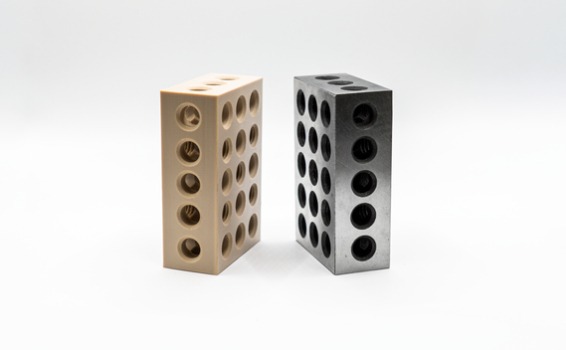
Plastics are often the best lightweight materials for industrial components because they combine low weight with useful mechanical, chemical and electrical properties. In suitable applications, replacing metal, glass or timber with plastic can reduce component weight, simplify handling, resist corrosion and support efficient manufacturing.
However, plastic is not automatically the right choice for every component. The operating load, temperature, wear, chemicals and required service life are important when selecting your material.
A lightweight material provides the required performance while keeping the mass of a component or structure as low as practical.
For manufacturers, weight reduction can make products easier to move, reduce loads on machinery and support more efficient equipment. The aim is not simply to choose the lightest material. It is to find the best balance between weight, strength, durability, manufacturability and cost.
Most plastics have a lower density than common engineering metals. This means a plastic component can often weigh less than a metal part of comparable size.
Engineering plastics can also provide application-specific advantages, including:
These properties make plastics useful lightweight alternatives in manufacturing, food processing, materials handling, transport, construction, automation and electrical applications.
Plastic can replace metal when the selected polymer can manage the mechanical load and operating environment without compromising safety or performance, therefore many manufacturers are switching from metal to plastic for certain applications.
Common examples include:
Replacing metal with plastic may also remove the need for painting or other corrosion-protection treatments. Some low-friction plastics can operate with reduced lubrication, depending on the component design and operating conditions.
However, metals may remain preferable where very high stiffness, extreme temperatures or substantial structural loads are involved.
Different thermoplastics solve different engineering problems. The right choice depends on the component, operating conditions and required performance.
Nylon (PA) is commonly selected for gears, rollers, wear pads and other moving components because it offers good toughness and wear resistance. However, nylon can absorb moisture, which may affect dimensional stability.
Acetal (POM) is often used for precision-machined parts, bearings and bushes. It combines good machinability, dimensional stability and low friction. Its suitability for chemical exposure and outdoor use should be checked.
UHMW-PE is well suited to conveyor guides, liners and wear strips because it provides low friction and strong abrasion resistance. It is less rigid than some other engineering plastics.
Polypropylene is a lightweight plastic with good chemical resistance and fabrication properties. It is frequently used for tanks, ducting and chemical-processing equipment. The expected load and operating temperature must be considered.
Polycarbonate (PC) is commonly chosen for machine guards, safety screens and transparent panels because of its impact resistance. Chemical compatibility, surface wear and UV exposure should be assessed.
PEEK is a high-performance engineering plastic used for demanding components exposed to heat, chemicals or mechanical loads. Its higher material cost means it is normally reserved for applications where its specialist properties are required.
What are the benefits of reducing component weight?
Selecting lightweight plastics can benefit both the product and the manufacturing process.
Lighter components are generally easier to lift, install and replace. Within moving machinery, reducing component mass may place less demand on drives, bearings and supporting structures. In transport applications, lower overall weight can also contribute to efficiency.
Plastic components can sometimes reduce maintenance requirements because they do not rust and may provide useful wear or low-friction characteristics. The result depends on choosing the correct material and designing the component for plastic use, rather than its metal counterpart.
To select a plastic alternative, it is important to consider the below:
Material selection should consider the complete operating environment. A lightweight material that performs well in one application may be unsuitable for another. Our team provide expert advice on the right material for your application.
Plastics can provide an effective route to weight reduction, but successful material substitution requires informed selection. Oadby Plastics supports UK manufacturers with plastic supply, machining, fabrication and practical technical guidance.
Use our Product Finder to explore suitable materials, or speak to our team about your application requirements.